
Nearly 300 Years of Butchery Tradition with a Clear View to the Future
The Failenschmid butchery is located in the village of St. Johann-Gächingen, about an hour's drive through mostly rural countryside from Stuttgart. The shop and inn have been part of the centre of the village for almost 300 years: 1740 is listed as the year the business was founded, and 250 years later, in 1990, today's owner took over the family business from his father. Since then, Ludwig Failenschmid has combined centuries of tradition with a clear view to the years and decades ahead. He trains butcher apprentices in his own workshop in order to preserve and pass on craft expertise. One constant at Albmetzgerei Failenschmid for decades: machines from K+G Wetter.
Craftsmanship meets high-tech
Anyone who listens to Ludwig Failenschmid immediately senses the master butcher's passion for craft production and quality. The nearly 20 butchers - all trained specialists - regularly produce around 140 products in the Failenschmid sausage kitchen. For bowl cutters and mixer grinders, the family has relied exclusively on technology from K+G Wetter for many years. "My father bought the first machines back then," Ludwig Failenschmid recalls. "Another manufacturer? That thought never came up, and it still does not."
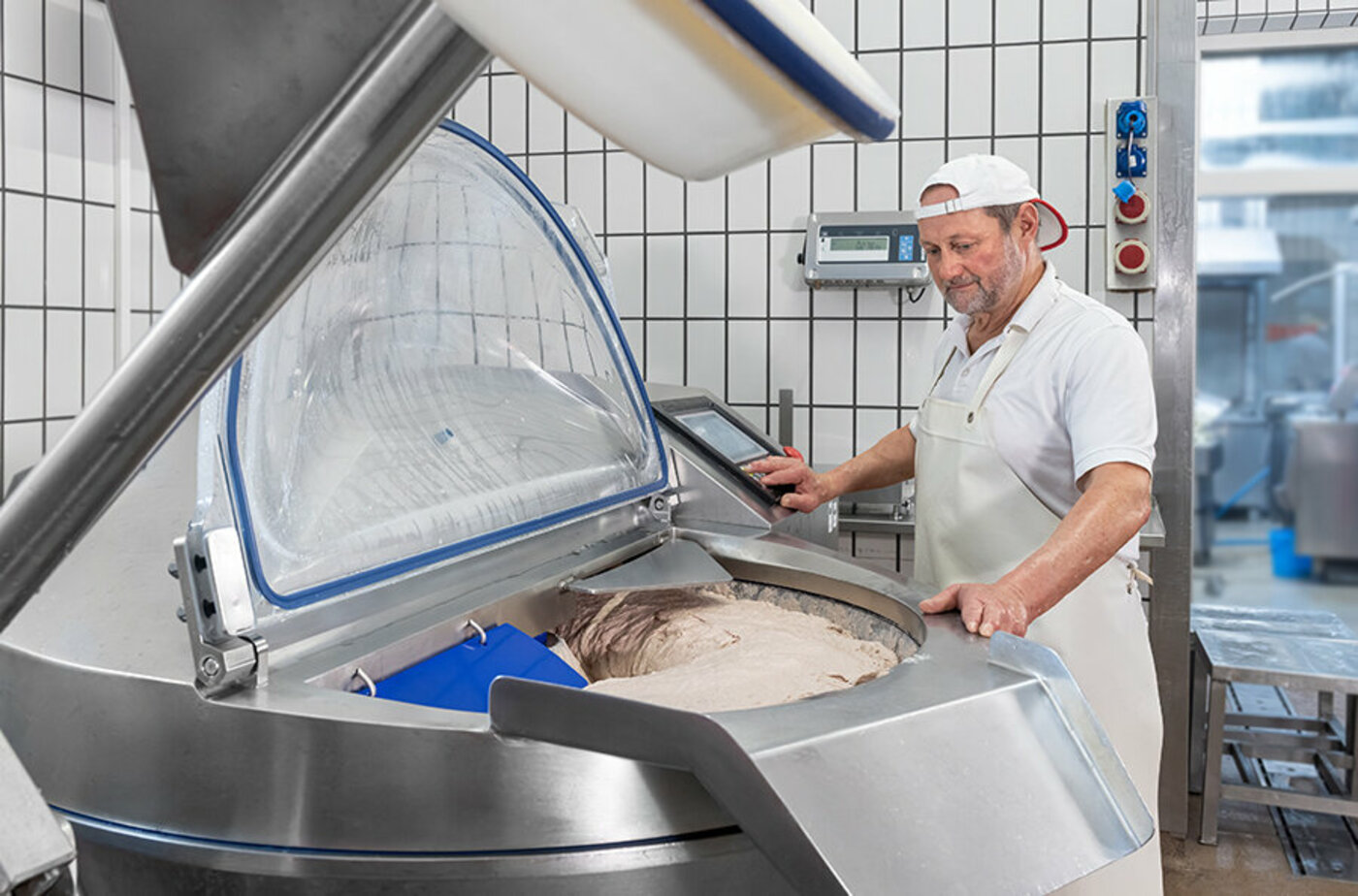
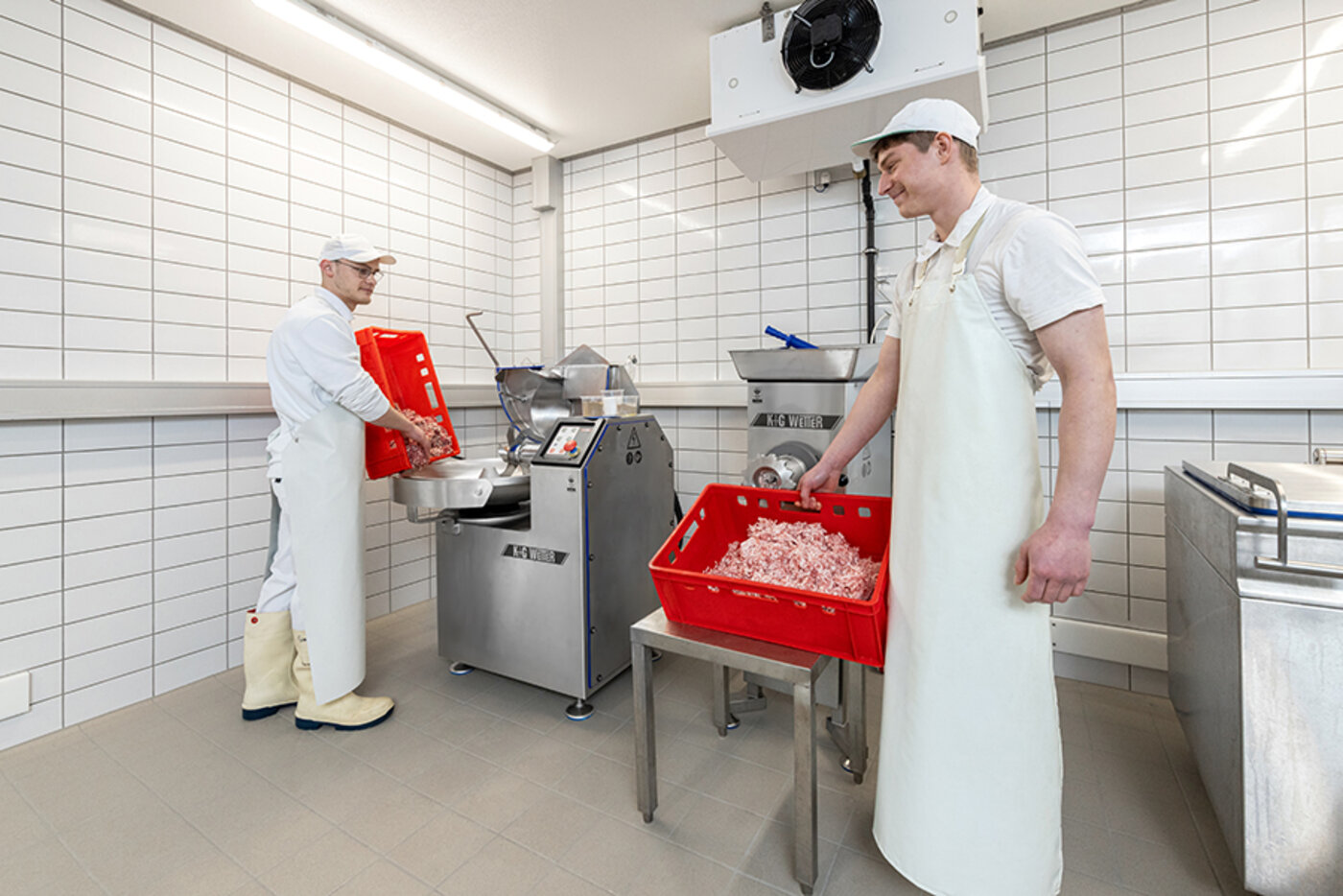
Currently in operation are a vacuum bowl cutter VCM 120 with cooking system and the mixer angle grinder MWW 130. "A vacuum bowl cutter of this size is something special in a craft-based business," says Ralf Klein, K+G Wetter regional sales manager, who has worked with Ludwig Failenschmid for many years. The vacuum bowl cutter supports the butchery's quality standards and also offers advantages in processing time: "Take calf's liver sausage as an example of a cooked sausage. Across the entire process, we usually save around one third of the time." The technical reason, as Ralf Klein explains, is the double-walled cooking bowl developed by K+G Wetter: "The steam heats our cutter bowl very quickly and energy-efficiently, only through the space between the two bowl walls. This is also particularly hygienic, because the steam remains completely separate from the product being processed." This is important for the taste of the sausage: "Unlike pre-cooking in a kettle, flavour and ingredients are not partly lost in the cooking water. The VCM 120 therefore preserves all valuable ingredients such as proteins and fat. And you can simply taste that."
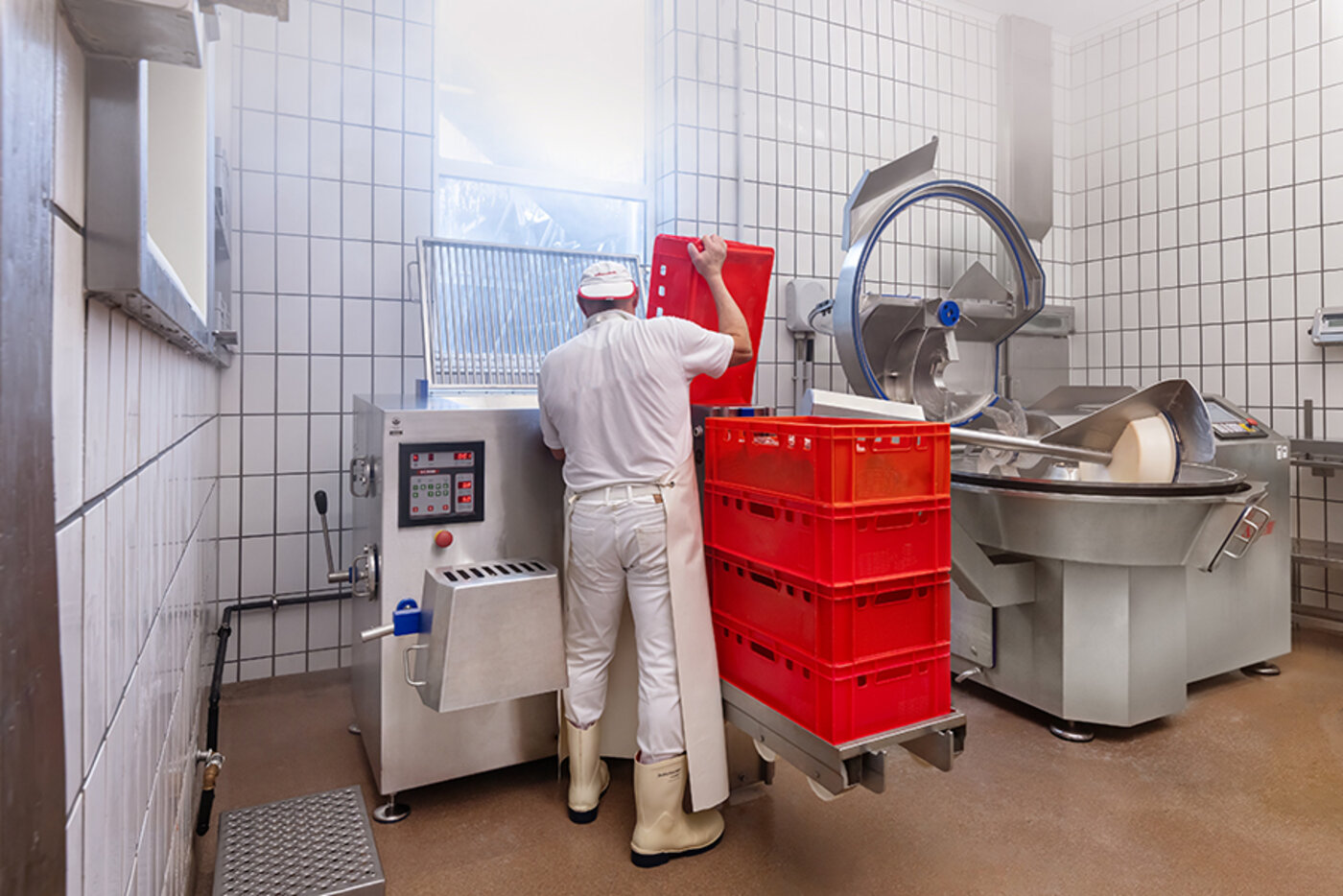
The mixer angle grinder MWW 130 from K+G Wetter, purchased at SÜFFA butcher trade fair in 2024, performs a wide range of tasks at Failenschmid. In addition to grinding meat for minced meat or mixing and processing raw sausage meat, the company also uses the grinder to remove cartilage and sinew from meat before it is further processed in the bowl cutter. Thanks to the pneumatic sorting device and the Clear Cut knife system from K+G Wetter, only the one to two percent of hard components are carefully removed. The advantages: no meat is wasted, and the connective tissue remains in the sausage meat - a decisive factor, for example, for the good "bite" in scalded sausage production.
"In terms of cutting quality, it is a quantum leap," reports Ludwig Failenschmid. "We already had sorting on the previous machine from K+G Wetter - but now pneumatic and with Clear Cut, it makes a huge difference. The service life of these knives is also much longer." The master butcher is convinced that investments in processing technology pay off. "Our recipes have not changed, but the quality is now much better. In the past, machines often ran for decades as long as they somehow still worked. Today, technical improvements are absolutely decisive."
To fill the grinder hopper - up to 140 kilograms per batch - the mixer angle grinder MWW 130 was equipped with the Easy Lift crate lifting system from K+G Wetter. Employees no longer have to lift the boxes with meat and other ingredients; they only tip them at the height of the hopper edge and empty them. "Our experience with it has been very good. It really makes the physical work at the machine enormously easier," explain Ludwig Failenschmid and his fellow master butcher Gerd Holder in unison.
One special feature in the product range of this southern German butcher's business is its wide variety of salami specialities. "That is actually not typical for our region," says Ludwig Failenschmid. "As a raw sausage, salami is traditionally more typical of northern Germany. That is due to the climate, because in the past you needed suitable, cool maturing rooms." Nevertheless, his earliest memories of the family business are closely linked to salami production: "Even as a young boy, I always helped brush and oil the raw sausages again and again in our attic – there were no maturing chambers back then – so that they could mature optimally."
Today, technology supports the production of these raw sausage specialities. Quality begins with the husbandry and selection of the cattle and pigs, buffalo and game that supply the meat - all from the immediate region. In-house slaughtering is also of great importance at Failenschmid: "It guarantees freshness, and you need fewer additives for binding in the sausage meat." Salami production, he says, is certainly a job for professionals at the grinder and bowl cutter: "You have to know what you are doing, and the process places completely different demands on technology and machines. Set one parameter incorrectly and the whole batch is ruined." It is no coincidence that Ludwig Failenschmid was immediately convinced when K+G Wetter Managing Director Volker Lauber introduced him to the Cut Control recipe management software. "I knew immediately that I wanted it." The advantage: recipes can be stored in the program in detail, including ingredients, quantities and processing steps. All parameters such as temperatures, bowl revolutions and processing times can be specified exactly – making expensive failed batches practically impossible.
Unique: Alb buffalo specialities from Albmetzgerei Failenschmid
A special offering from Albmetzgerei Failenschmid is sausage and meat from the so-called Alb buffalo. These impressive, deep-black cattle with their huge, curved horns originally come from marshy regions, for example in Italy – their milk is used to make traditional Mozzarella di Bufala. For many years, however, buffalo have also been at home on the dry Swabian Alb, where they live close to nature on extensive pastures. "The meat is completely different from normal beef," says Ludwig Failenschmid. "It goes distinctly in the direction of game, with a very dark colour and long meat fibres." Another special feature: Alb buffalo meat has no intramuscular fat – virtually the opposite of trendy Wagyu beef with its extremely high fat content. "Alb buffalo fat also has a very high melting point. It does not melt at body temperature in the mouth when eaten and leaves an unpleasant film," explains master butcher Failenschmid. At the same time, this regional buffalo meat is lean and rich in protein, making it a good fit for modern diets. In sausage production at Albmetzgerei Failenschmid, the buffalo's own fat is replaced by linseed oil – also a product from the region.
Special meat, special processing technique
The special structure of this regional meat speciality naturally requires particular knowledge and technology when it is processed into sausage. "For this, we bone out the meat while it is still warm after slaughter, cut it into fist-sized pieces and freeze it. Rapid freezing halts the breakdown of ATP, thus prevents the pH from dropping and breaks open the meat cells. Later, this also supports drying during the maturing phase when it is processed into buffalo salami and other products."
During processing in the bowl cutter, a raw sausage knife head is used. "The shape of the three sickle knives used here lengthens each cutting edge by around 30 % compared with straight knives, and they cut cleanly through the meat fibres with a pulling cut. This produces a clear cutting pattern," says K+G Wetter Sales Manager Ralf Klein, who is also a trained master butcher. This is important both for the appearance of the sausage and for the maturing process.
In addition, the baffle plate in the knife cover of the VCM 120 is removed - another feature of K+G Wetter bowl cutters for raw sausage with optimum consistency. In the enlarged cutting chamber, meat and fat flow through the knife head without resistance. This makes the cut clearer, prevents protein extraction, and prevents a smear film from forming around the particles. "The capillary flow is then not impaired, so the sausage dries more evenly later on," explains Ludwig Failenschmid. "If that is not the case, you often only notice it during the maturing process: the salami closes on the outside, meaning a dry layer forms around it, while the inside remains too moist for too long and can develop a sour taste."
Also decisive for buffalo salami, and for all other raw sausage varieties: the vacuum function of the VCM 120. "That is very important," emphasizes salami specialist Failenschmid. "The vacuum draws air pockets out of the sausage meat. This has a positive effect on shelf life, because the finished product then has less contact with oxygen - and that is extremely important, especially with raw sausage."
The vacuum function of the VCM 120 is also used for all scalded sausage varieties, where it delivers its benefits as well: more protein extraction, fewer air pockets, more stable colour, longer shelf life and more flavour.
The future needs traditional knowledge and new talent
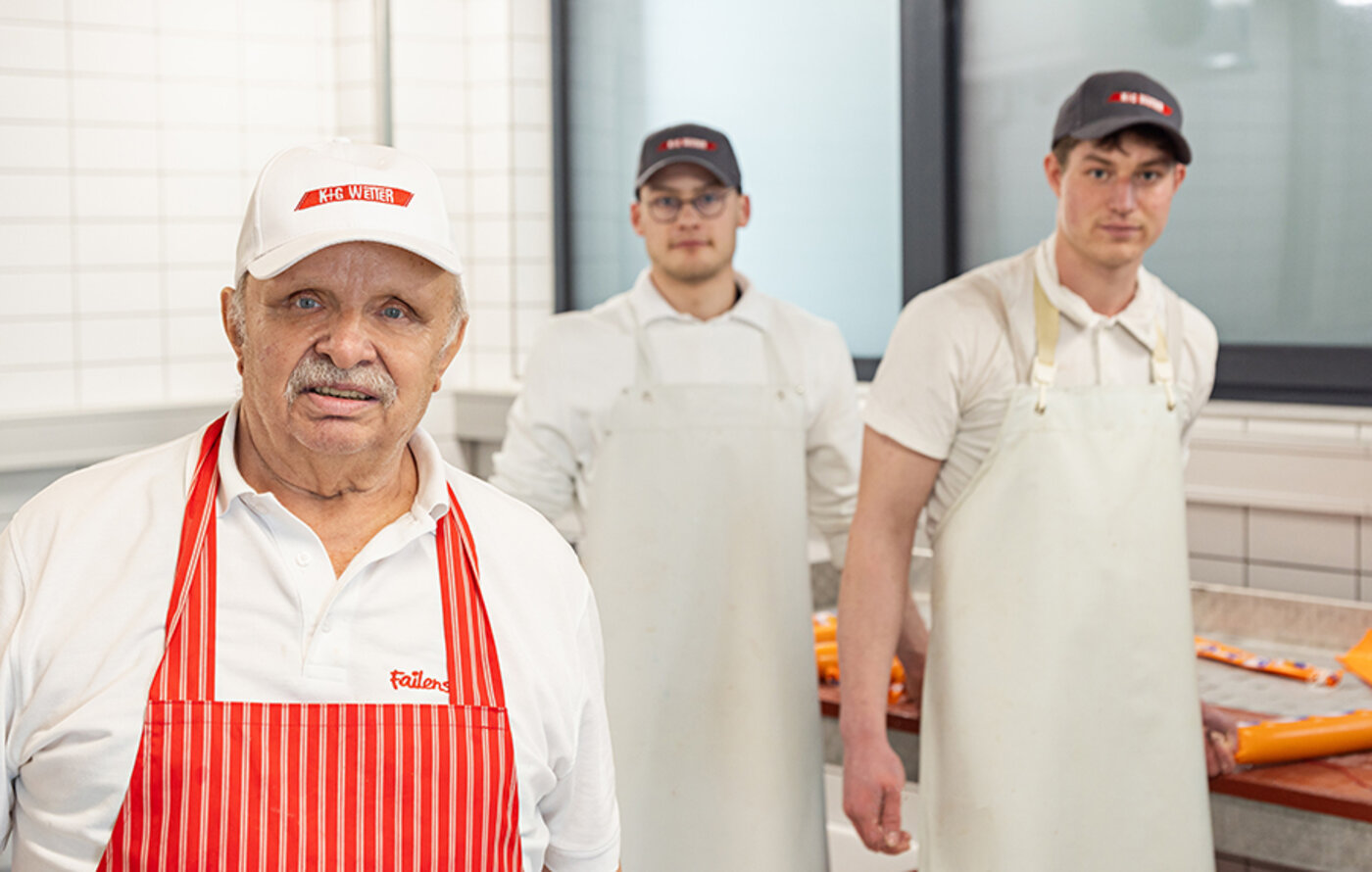
To ensure that the butchery tradition at Failenschmid continues up to the company's 300th anniversary and beyond, Ludwig Failenschmid invested in his own training workshop two years ago. "We currently have six young men training with us: three in their first year, two in their second and one in his third. All from the region, all from farming backgrounds. They are excellent and really on the ball," says Ludwig Failenschmid, clearly enthusiastic about the next generation of skilled workers. Every two weeks, the apprentices spend time in the company's own workshop and learn the craft from the ground up.
Trainer Edgar Kuhn is responsible for this. Ludwig Failenschmid brought the master butcher and vocational schoolteacher with decades of experience out of retirement especially for the role. "That was an unbelievable stroke of luck." With him, the future butchers learn the fundamentals of the craft in both practice and theory: how different types and qualities of meat feel, what that means for processing, and how seasoning blends are composed. Not least, they learn the tricks, techniques, passion and enthusiasm that are part of the butcher's craft. "It is important to me that the apprentices learn and understand fully traditional production, using as little technology as possible," says Edgar Kuhn. The technology in the training workshop is therefore simple - but here, too, the bowl cutter and grinder come from K+G Wetter. "I still know these machines from my time at vocational school. Back then they came from predecessor company Krämer + Grebe, and even then they were very good," the trainer recalls. In the training workshop, the apprentices learn on an SM 33 bowl cutter and an EW 98 electric grinder.
Currently on the curriculum: Gelbwurst (yellow sausage) – a regional scalded sausage speciality. "The name comes from the fact that traditionally only regular salt is used here, not curing salt. As a result, the sausage does not have a reddish colour, but a light, yellowish one," explains Edgar Kuhn. With this product, his apprentices learn the so-called build-up method for producing sausage meat, using lean meat, fat and ice in a ratio of 40-40-20. Meat, ice, salt and phosphate are first cut together in the bowl cutter in order to extract the protein.
The seasoning is also added during the first processing step. Ginger, cardamom, lemon, onions and mace, among other ingredients, provide the exceptionally fresh flavour, Edgar Kuhn reveals. "Once the sausage meat has reached a temperature of two degrees, the fat is added. Everything is then cut up to a temperature of around 11 to 12 degrees to obtain a stable emulsion. Together with the remaining ice, the bowl cutter process then continues to the final temperature of eight degrees," explains trainer Kuhn. The fresh flavour of Failenschmid Gelbwurst is underlined both visually and in taste by the addition of flat-leaf parsley shortly before the end of the bowl cutter process.
What the Failenschmid apprentices produce in the workshop with Edgar Kuhn is sold in the always well-visited shop in the centre of Gächingen and promoted as an apprentice product. "It is really popular. Customers actively ask for it. That naturally makes our young men very proud," say the trainer and operations manager. One resulting success: Failenschmid receives enquiries for apprenticeship places instead of having to spend time searching for apprentices.
Village butchery, service station and catering as pillars of the business
In addition to the apprentices’ products, the Failenschmid store offers a wide variety of other sausage and meat specialties, all made in-house. These also include whole shelves of high-quality preserves with ready-made meat dishes ranging from home-style cooking to international cuisine: roulades and sauerbraten, soups and stews, scaloppine and Bolognese. Practical for people in a hurry and for working customers: all desired products can be pre-ordered via app and then collected from the chosen branch.
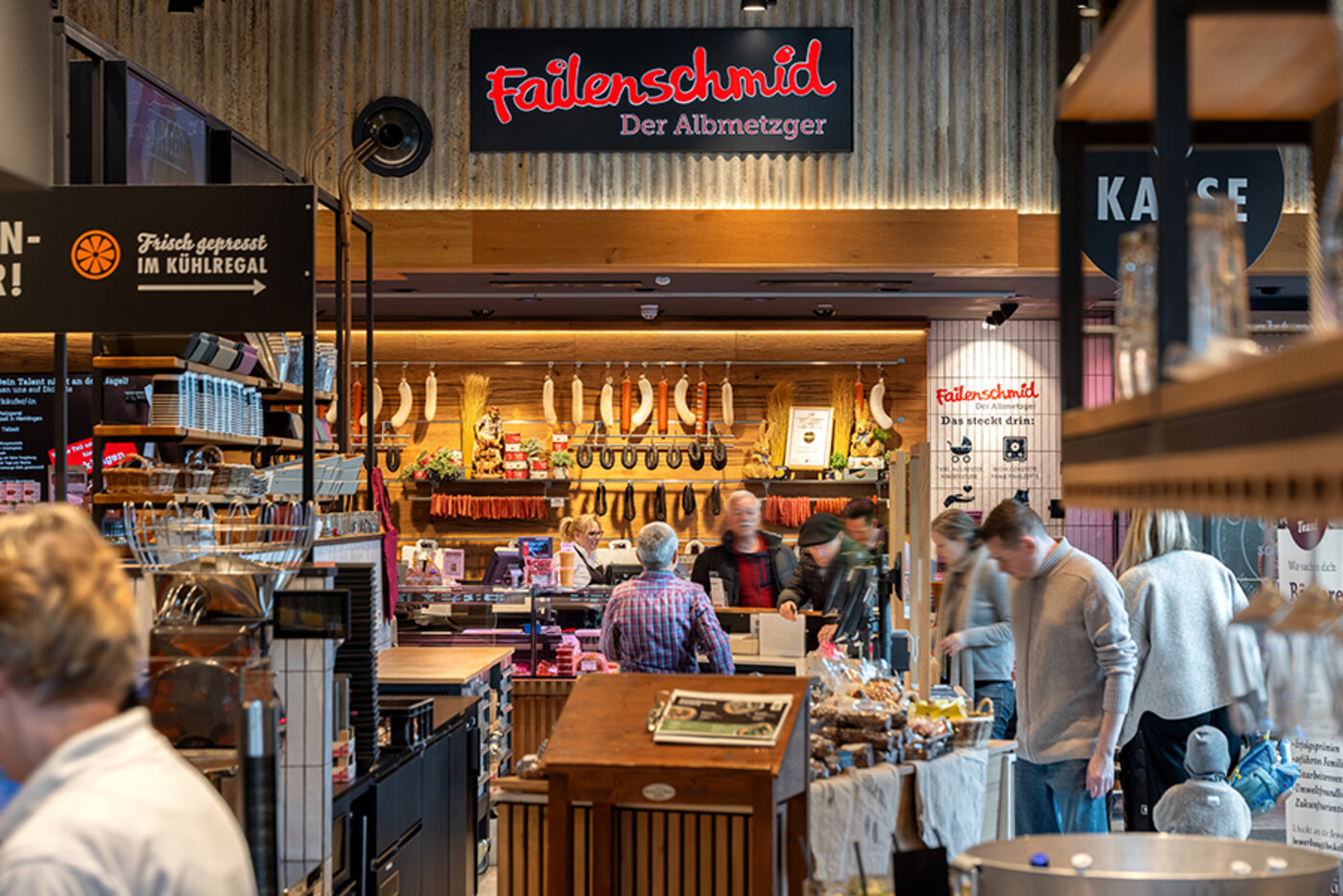
One of these branches is located at H-Albzeit, a huge, modern rest stop on the A8 Stuttgart-Munich highway, operated by the regional bakery BeckaBeck. Here, they have created a Swabian market hall with a bakery, butchery and gastronomy concept - a place open seven days a week for travellers, local residents and events alike. Catering here and for further celebrations is another major pillar of Albmetzgerei Failenschmid.
Photos: K+G Wetter
Photo 1 and 2: Albmetzgerei Failenschmid relies on bowl cutter and grinder technology from K+G Wetter: the VCM 120 vacuum cooking bowl cutter (left) and the MWW 130 mixer angle grinder with the Easy Lift lifting system.
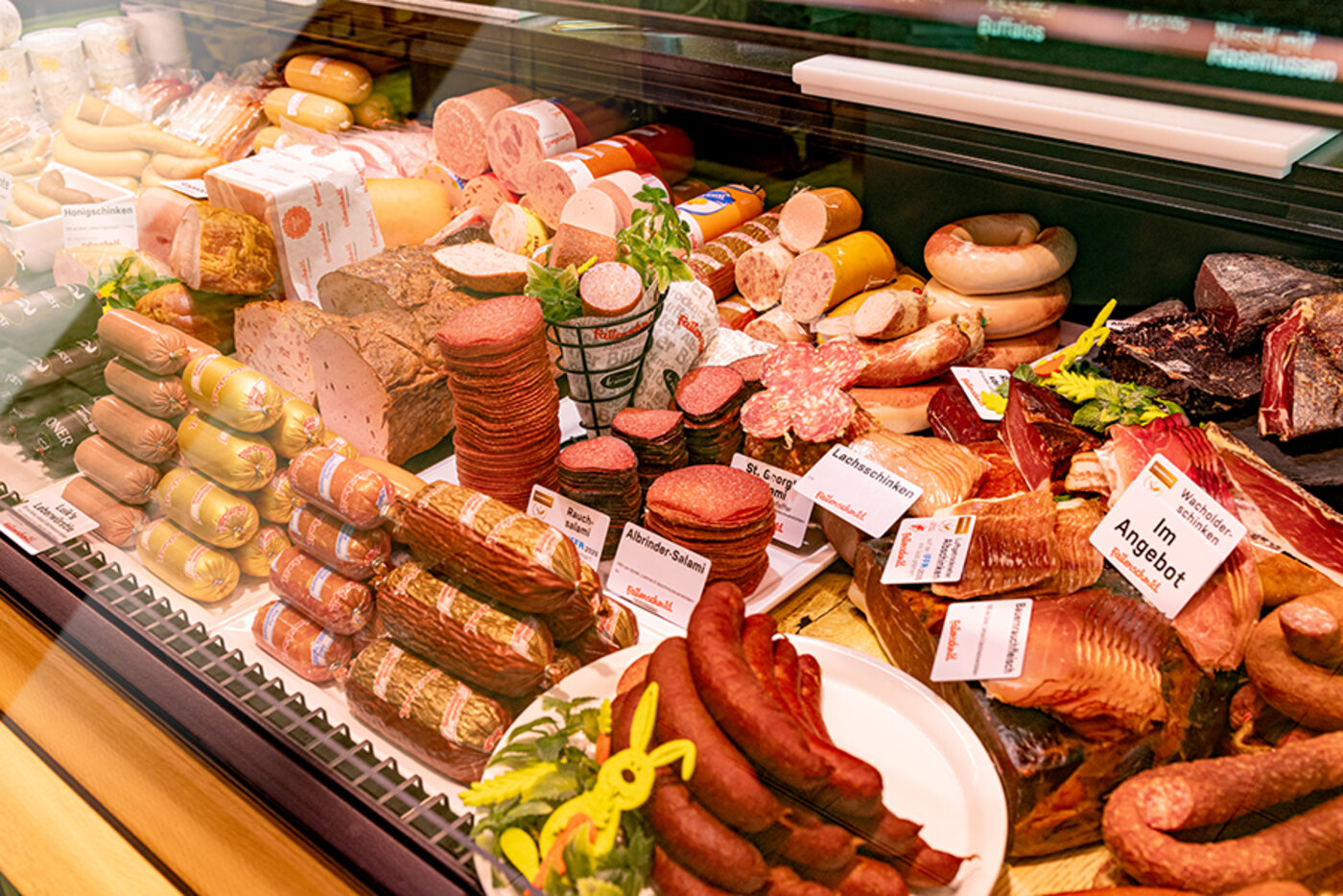
Photo 3 and 4: Albmetzgerei Failenschmid sells around 120 sausage varieties in its shop in Gächingen and at the H-Albzeit service station on the A8 motorway.
Bild 5 und 6: Ensuring that 300 years of butchery tradition also has a future: instructor Edgar Kuhn and the Failenschmid apprentices Simon and Magnus working in the company’s own training workshop with the SM 33 bowl cutter and the EW 98 electric grinder from K+G Wetter.